Collector's Insight — Park City
Utah is becoming a collector's haven. Here is what high-net-worth buyers need to understand about acquiring fine art in the Park City market — and how to make it work for your balance sheet.
In This Guide
• 01 Why Utah Is a Collector's Haven
• 02 Tax Benefits of Art Ownership
• 03 Art Appreciation: Case Studies
• 04 How to Start a Collection
• 05 The Park City Advantage
• 06 Frequently Asked Questions
Why Utah Is a Collector's Haven
The conversation about fine art collecting used to be centered on New York, Los Angeles, and Miami. That is changing. Utah — and Park City specifically — has quietly become one of the most compelling environments in the country for serious collectors.
The reasons are structural, not accidental. Utah has no estate tax, which means artwork accumulated over a lifetime can pass to heirs without the compounding burden that hits collectors in New York (16%) or Massachusetts (12%). For collectors thinking generationally, this alone is a material advantage in how a collection is built, valued, and ultimately transferred.
The state's income tax rate — flat at 4.55% — is among the lowest in the West. For high earners relocating from California (13.3%) or New York (10.9%), the effective tax savings in a single year can more than fund a serious art acquisition. This migration dynamic is already reshaping the collector base in the Park City area, with an influx of sophisticated buyers from coastal markets bringing both capital and established collection instincts.
Then there is the cultural infrastructure. The Sundance Film Festival brings an internationally connected creative community to Park City every January, sustaining year-round demand for contemporary art from a market segment — film industry professionals, independent producers, brand executives — that is accustomed to paying for cultural significance. That is an unusually strong demand base for a mountain market.
The Park City Gallery Association runs monthly gallery strolls that draw several hundred visitors per event — an institutional infrastructure that sustains collector engagement between major art fairs. For collectors who want access to a real collecting community without relocating to a primary art market city, Park City offers a genuine alternative.
What it still lacks is a primary gallery with the reach and artist relationships to compete with the top-tier contemporary galleries in those coastal markets. That gap represents both the opportunity and the thesis behind acquiring serious work here while the market is still maturing.
Tax Benefits of Art Ownership
Fine art has a more complex and more favorable tax profile than most asset classes. The specific benefits available depend on how the work is used, where it is displayed, and how it is ultimately disposed of. For business owners and high-net-worth individuals, the strategies are substantial.
The following overview covers the primary mechanisms. This is not tax advice — always work with a qualified CPA or tax attorney before executing any strategy. For a deeper breakdown of the investment angle, see our Investment Research page and the dedicated Tax Strategy guide , and our in-depth post on contemporary art as a portfolio hedge .
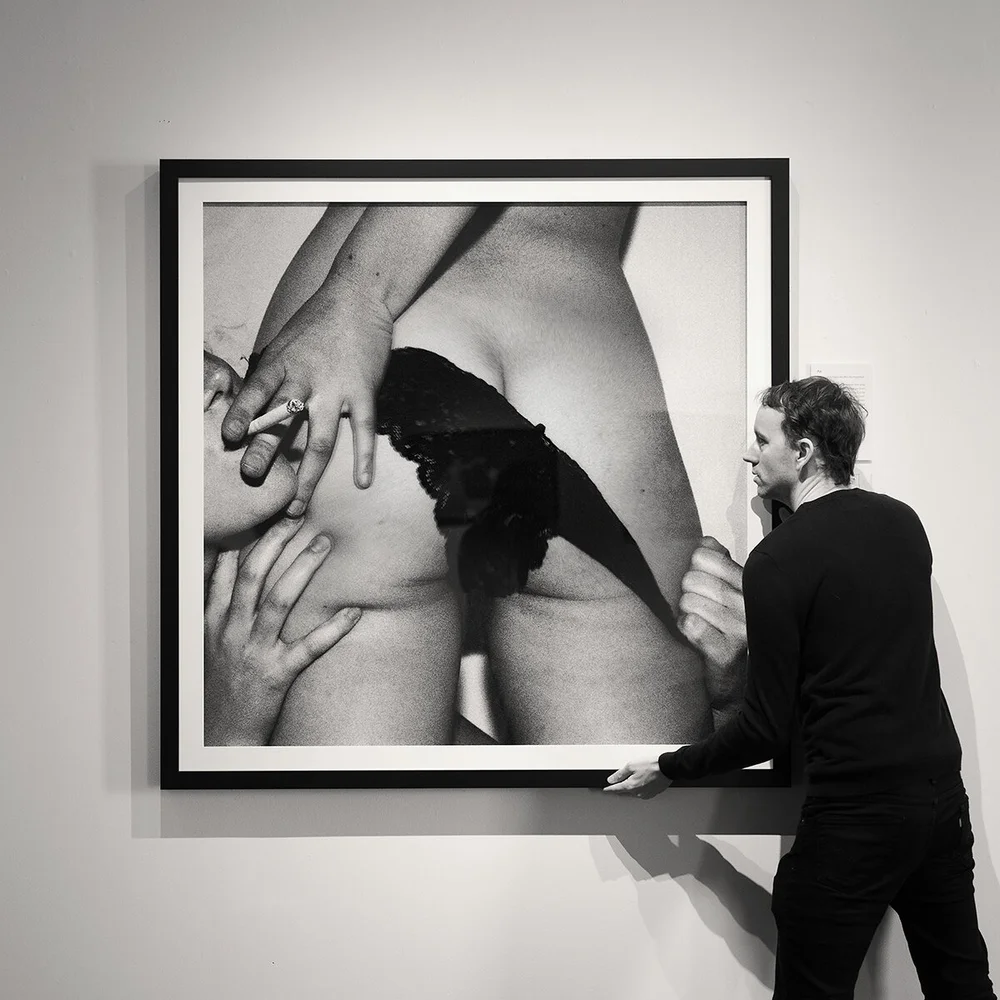
Works displayed in qualifying business locations may be eligible for Section 179 expensing or bonus depreciation treatment.
Section 179 & Business-Use Art
Under Section 179 of the Internal Revenue Code, businesses can immediately expense the full cost of qualifying property placed in service during the tax year, rather than depreciating it over time. The 2024 deduction limit is $1,220,000 with a phase-out starting at $3,050,000 in total equipment purchases.
Fine art displayed in a business location — a corporate office, a hotel lobby, a private office used for client meetings — may qualify as Section 1245 property subject to depreciation and, by extension, Section 179 expensing. The key requirement is that the artwork has a determinable useful life and is used in a trade or business. Courts and the IRS have addressed this in several cases; the outcomes turn on the specific facts of use and documentation.
• 2024 deduction limit: $1,220,000 per year
• Phase-out threshold: $3,050,000 in total qualifying purchases
• Requires business use: work must be displayed in qualifying business location
• Documentation matters: retain purchase records, display location evidence, and business-use justification
• Not available for works held purely as investments or displayed in personal residences
De Minimis Safe Harbor
The de minimis safe harbor, established under Treasury Regulation §1.263(a)-1(f), allows businesses to immediately expense items costing $2,500 or less per item (for businesses without applicable financial statements — $5,000 with AFS). This provision makes lower-priced works — photography editions, smaller prints — straightforwardly expensable in the year of purchase without the analysis required for larger acquisitions.
For collectors building a diverse collection, the de minimis safe harbor creates a natural entry strategy: acquire multiple works in the $1,000–$2,500 range, expense them immediately, and build a track record with specific artists whose markets you want exposure to at larger scale later.
Bonus Depreciation
The Tax Cuts and Jobs Act of 2017 introduced 100% bonus depreciation for qualifying property — accelerated expensing of the full cost in the first year. While bonus depreciation has been phasing down (80% in 2023, 60% in 2024, 40% in 2025, 20% in 2026), it remains meaningful for current-year acquisitions. Art that qualifies as Section 1245 property used in a business may be eligible.
The practitioner argument for applying bonus depreciation to art is evolving and fact-specific. Works with clear business-use documentation in commercial settings (hotels, medical offices, corporate headquarters) have the strongest basis. Works in mixed personal/business use require careful allocation.
Charitable Donation Strategy
Donating appreciated art to a qualifying public charity generates a deduction equal to the fair market value at the time of donation — not your original cost basis. For works that have appreciated significantly, this creates a powerful double benefit: you eliminate the capital gains tax you would have paid on a sale, and you receive a deduction at the appreciated value.
The deduction is subject to percentage-of-AGI limits: generally 30% of AGI for capital gain property donated to a public charity, with a five-year carryforward. For major collections, a charitable remainder trust or private foundation structure may optimize the timing and size of the deduction. See our Tax Strategy page for the full charitable donation analysis.
• Business display: Section 179 or bonus depreciation — immediate expensing of qualifying works
• Sub-$2,500 works: De minimis safe harbor — straightforward expensing
• Appreciated works: Charitable donation at fair market value eliminates capital gains exposure
• Advisory fees: Gallery and art advisor fees may qualify as Section 162 ordinary business deductions
• Estate planning: Utah's zero estate tax creates generational transfer advantages
The combination of these provisions means that well-structured art acquisition — particularly for business owners displaying work in commercial spaces — can generate meaningful tax efficiency alongside appreciation potential. The two do not compete; they compound.
Art Appreciation: Case Studies
Tax efficiency is the entry point. Appreciation is the thesis. The art market has produced some of the most extraordinary risk-adjusted returns of any asset class over the past 50 years — for collectors who understood what they were buying and why.
The following case studies illustrate the scale of potential returns, and more importantly, the conditions that produced them. Understanding the pattern — early acquisition, direct gallery relationship, artist with institutional trajectory — is more useful than the headline numbers alone. For more detailed data, see the Investment Research page .

Contemporary photography editions from represented artists offer direct gallery pricing before secondary market appreciation.
Warhol's market is the defining example of what primary gallery acquisition, held to maturity, can return. Works acquired in the 1970s for low four figures have sold at Christie's and Sotheby's for $2–15 million in the last decade. The appreciation is not uniform — specific series (Flowers, Marilyns, Maos) have dramatically outperformed — but the compound annual return on best-in-class Warhol held since the 1970s exceeds the S&P 500 by a wide margin.
The lesson: the market rewards works acquired from the source gallery while the artist's institutional trajectory was still forming. Warhol's 1964 exhibition at the Stable Gallery was the inflection point. Early primary acquisition is the unreplicable advantage.
Banksy's secondary market appreciation illustrates the power of edition scarcity combined with cultural relevance. Prints issued in runs of 150–500 at £45–£400 in the early 2000s now regularly achieve £30,000–£200,000 at Bonhams and Heritage Auctions. The 2018 Sotheby's shredding incident — where "Girl with Balloon" partially shredded itself after selling for £1.04 million — subsequently sold for £18.6 million in 2021 as "Love is in the Bin," a 1,690% increase in three years on the same physical work.
The lesson: cultural narrative compounds financial return. Works that become part of the conversation about what art is and what it means have an appreciation runway that purely aesthetic works do not.
Tyler Shields represents the current-generation counterpart to these historical examples — an internationally exhibited photographer with gallery representation, a documented collector base, and works available at primary gallery pricing. His editions are small (typically 3–10), his subject matter is culturally engaged, and his institutional trajectory — major publications, celebrity subjects, gallery shows in multiple markets — mirrors the early-career indicators that have historically preceded significant appreciation.
The window to acquire at primary pricing closes when secondary demand drives prices above gallery list. That window is open now. Collectors who understand the Warhol and Banksy case studies understand what the Shields acquisition opportunity looks like at this stage of his career.
The common thread across all three cases: small editions, primary gallery acquisition, institutional momentum, and cultural staying power. These variables are identifiable before the fact — they are not the product of hindsight. A disciplined acquisition strategy built around these criteria will not capture every appreciation event, but it will position a collection in the part of the market where appreciation is structurally most likely.
How to Start a Collection
Building a collection with both aesthetic and financial coherence requires a framework. Most collectors who regret early purchases bought reactively — attracted to a piece without understanding what they were acquiring or why. The collectors who build significant collections start with a thesis and build toward it deliberately.
Establishing Your Budget and Structure
A serious collection does not require unlimited capital. It requires consistent allocation and selectivity. The most common structure for new collectors: establish an annual acquisition budget (often 2–5% of investable assets), set a per-work minimum that ensures you are acquiring works with genuine market potential (generally $5,000+), and commit to holding for at least five years.
The $5,000 minimum is not arbitrary. Below that threshold, the universe of works with real secondary market potential narrows dramatically. Photography editions, limited prints, and works on paper from represented artists in the $5,000–$25,000 range represent the best risk-adjusted entry into the market — genuine collectibility, primary gallery pricing, and real appreciation potential if the underlying artists' markets grow.
• Annual budget: 2–5% of investable assets is a common institutional framework
• Per-work minimum: $5,000+ for genuine secondary market potential
• Edition size priority: works in editions of 3–10 outperform larger runs on appreciation
• Holding period: plan for 5–10 years minimum; art is illiquid by nature
• Documentation: retain all certificates of authenticity, provenance records, and gallery invoices
Sourcing Works
The primary gallery relationship is the foundation of serious collecting. When you acquire from a gallery that represents an artist directly, you get first access to new work, set pricing (no auction premium), full documentation, and a relationship that can provide priority access to future acquisitions as the artist's market develops.
For collectors interested in building a diversified collection across several artists, our Art Sourcing & Concierge service offers research, authentication support, and access to works from both primary and secondary markets. Sourcing at scale requires network — knowing which galleries are representing which artists, and which secondary market sources can be trusted.
Diversification
A well-diversified collection across 8–15 works from 3–5 artists reduces single-artist risk while maintaining sufficient concentration to benefit from meaningful appreciation events. The equivalent of "too diversified" in art collecting is owning one work from 40 different artists — at that point, the collection has no thesis and no chance of producing the outsized returns that come from a single artist's market moving significantly.
Diversify across: media (photography, prints, originals), career stage (established, mid-career, emerging), and geography (artists with international market presence alongside local market artists). For the full collecting framework, see the Complete Collecting Guide and our practical guide on starting a collection in Park City .
Consignment and Exit
The exit strategy is part of the acquisition strategy. Works acquired from galleries with active consignment programs have a built-in liquidation path — if the gallery has sold work successfully, it has the collector relationships and the market position to resell. For collectors who may want to rotate a collection over time, establishing the consignment relationship at acquisition is more efficient than sourcing one at sale time. Learn more about the Consignment program .
The Park City Advantage
Park City's position in the art market is at an inflection point. The structural ingredients — tax environment, cultural infrastructure, collector migration, and world-class venue through Sundance — are in place. What the market has lacked is primary gallery infrastructure capable of acquiring, representing, and selling works that meet the standards of serious collectors. That is what we are building.
Investment-grade contemporary photography from represented artists, available through Provocateur Gallery's primary market program.
Sundance and the Creative Economy
The Sundance Film Festival is not just a film event — it is a 10-day concentration of the global creative industry in a single zip code. Film directors, studio executives, brand sponsors, independent producers, and international distributors converge on Park City every January with checkbooks open and an appetite for cultural engagement that extends well beyond cinema.
For galleries with inventory aligned to the cultural values of that audience — contemporary photography, conceptual work, artist-driven narrative — Sundance represents a unique annual sales environment. The collectors it brings are often already sophisticated buyers in LA or New York who are seeing the Park City market fresh, and who will acquire if the work is right and the gallery relationship is established.
Gallery Stroll and the Local Collector Community
Park City's monthly gallery stroll is the institutional backbone of the local collector community. Unlike one-off events, the stroll creates a sustained rhythm of collector engagement throughout the year — regular contact between galleries and the buyers who show up month after month because they are genuinely interested in what is on the walls.
The collectors who participate in the stroll are not casual lookers. They are second-home owners, business owners, and professionals who have disposable income and an active interest in the art market. This is the precise demographic that responds to investment-grade art presented with clear financial and aesthetic context.
Second-Home Economics
Park City's second-home market is driven by skiers, Sundance regulars, and remote workers who want access to the Wasatch without the year-round commitment of primary residency. For this buyer, art fulfills a specific function: it transforms a resort property into a personal statement, and it can be structured — through the tax provisions outlined above — to work as a business asset if the property is used in any business capacity.
The intersection of ski-season residential demand, tax-friendly state environment, and a growing gallery infrastructure is what makes Park City a compelling collector market for the next decade. The buyers are here. The infrastructure is developing. The primary acquisition window — before secondary market pricing reflects the full maturity of the local market — is now.
How Provocateur Gallery Fits
Provocateur Gallery is the primary gallery in this market with direct relationships with represented artists and access to curated secondary market works. We maintain a dedicated investment research program that tracks auction results, edition availability, and market indicators for the artists we represent.
For Park City collectors who want to build a serious collection — one that reflects both their aesthetic sensibility and their financial sophistication — we offer the combination that is otherwise unavailable in this market: primary gallery access, full documentation, price-match guarantees against other retail gallery pricing on the same works, and a consignment program that provides a structured exit path when and if you choose to rotate.
This is not a pitch for art as a purely financial instrument. The collectors who have done best over time are the ones who bought work they genuinely wanted to live with, from artists they genuinely believed in. The tax strategy and appreciation potential are real and substantial. But they are most powerful when they are secondary to a collection built with real conviction.
Frequently Asked Questions
The questions we hear most from Park City collectors considering their first serious acquisition.
Art can be an excellent investment when acquired strategically. Works by artists with strong gallery representation, museum acquisitions, and auction track records have historically appreciated significantly — Andy Warhol works have returned over 2,900% at auction. The key is buying from primary galleries with direct artist relationships, acquiring small-edition works, and holding through artist career inflection points. Art also offers non-correlated returns relative to equities and real estate, making it a genuine portfolio diversifier. For the full data, see our Investment Research page .
Yes, under several provisions. Works displayed in a qualifying business location may qualify for Section 179 expensing (up to the annual limit) or bonus depreciation if treated as Section 1245 property. Works under $2,500 may be fully expensed under the de minimis safe harbor. Art donated to qualifying charitable organizations can be deducted at fair market value, subject to percentage-of-AGI limits. Advisory fees paid to galleries or art advisors may qualify as Section 162 ordinary business expenses. Always consult a qualified tax professional before acting on any tax strategy. See our full Tax Strategy guide for detailed analysis.
Provocateur Gallery is a primary source for investment-grade contemporary art in the Park City and broader Utah market. We maintain direct relationships with represented artists — including internationally exhibited photographers — and offer price-match guarantees against other retail gallery pricing on the same works. Collectors benefit from full provenance documentation, certificates of authenticity, and access to works before they reach secondary market auction. Contact us via the inquiry form to discuss your collection goals.
Park City combines several collector-friendly conditions: Utah has no estate tax and a flat 4.55% income tax rate; the Sundance Film Festival creates sustained cultural demand from an international creative community; the monthly Gallery Stroll builds consistent collector engagement; and the high concentration of second-home owners provides a sophisticated buyer base. Art purchased and displayed here also benefits from the same business-use tax provisions available anywhere in the US, making it structurally advantageous for business owners and executives with Park City properties.
Next Step
Schedule a Free Consultation
Our gallery team works directly with collectors at every stage — from first acquisition to mature collection management. If you are based in Park City or are a frequent visitor looking to build a serious collection, we can walk you through current availability, tax structuring considerations, and the acquisition strategy that fits your goals.
Investment disclaimer: Past appreciation does not guarantee future returns. Art should be acquired primarily for its aesthetic and cultural value; financial returns are not guaranteed. This content is for informational purposes only and does not constitute tax or investment advice. Consult qualified professionals before making acquisition or tax decisions. Full investment disclaimer.
Related Posts
Stay in the conversation
Art market insights, new acquisitions, and investment strategies — delivered weekly.